


Dental Extraction Instruments: Essential Tools for Safe & Precise Tooth Extraction

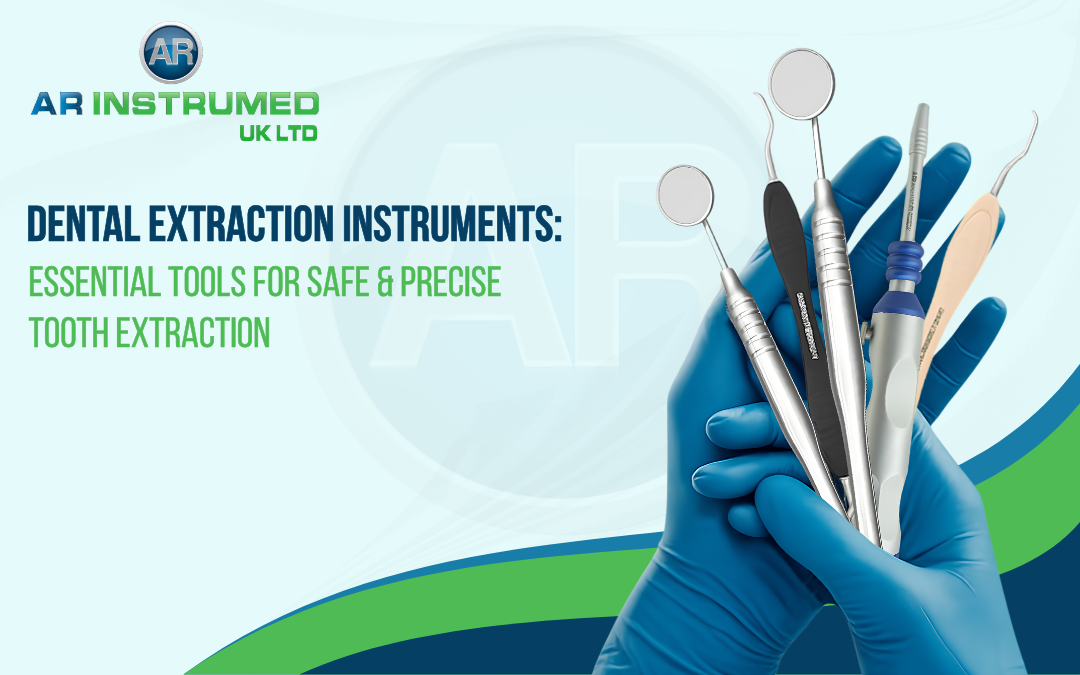
Choosing the right dental extraction instruments affects control, access and efficiency at every stage of a procedure. For UK dental professionals, that means matching each instrument to the intended technique and buying tools with precise geometry and the durability to withstand repeated sterilisation. This guide covers the main instrument types, how they differ, and what to check before you buy, whether you are equipping one surgery or supplying several sites.
What Are Dental Extraction Instruments?
Dental extraction instruments are hand instruments used to loosen, grip and remove teeth or roots, and to manage the surrounding tissue and bone during extraction. The core groups are extraction forceps, elevators, luxators and periotomes, supported by surgical instruments such as periosteal elevators and bone rongeurs. The appropriate instrument depends on the procedure and clinical circumstances.
AR Instrumed's dental extraction instruments range covers more than 80 products, including:
- Extraction Forceps
- Root Elevators
- Micro Elevators
- Periotomes
- Bone Rongeurs
- Paediatric Forceps
- Dental Extraction Sets
Essential Types of Dental Extraction Instruments
Extraction Forceps
Extraction forceps grip the crown or root so the clinician can deliver a tooth that has been loosened. Beak shapes are tooth-specific, with separate patterns for upper incisors and canines, premolars, and left and right molars, plus smaller designs for children. AR Instrumed lists its extraction forceps by figure number, for example Fig.1 for upper incisors and canines and Fig.17/18 for upper molars.
Root Elevators and Dental Elevators
Elevators are levered instruments used to loosen a tooth in its socket or mobilise a retained root. Straight and curved patterns come in different widths, and micro elevators offer finer tips for restricted access. For tip shapes, sizes and angles, see our earlier guide to dental root elevators , or browse the root elevator range .
Luxators and Periotomes
These thin-bladed instruments are designed to cut through periodontal ligament fibres and loosen the tooth with minimal lateral force, which suits techniques that aim to be minimally traumatic. Their fine blades are used with controlled pressure rather than heavy levering, so follow the manufacturer's instructions and your clinical training. See AR Instrumed's dental luxators and periotomes .
Surgical Extraction Instruments and Accessories
Where a flap or bone removal is needed, additional dental surgical instruments come into play. These include periosteal elevators to reflect tissue, retractors for access, bone rongeurs to contour bone, and needle holders, scissors and tweezers for closure. Diagnostic instruments such as mouth mirrors support visibility and assessment. Many practices standardise with extraction instrument sets so every surgery is equipped consistently.
Dental Extraction Forceps vs Elevators vs Luxators
Forceps grip and deliver the tooth; elevators and luxators loosen and mobilise it.
| Instrument | Main Purpose | Typical Use | Key Buying Consideration |
|---|---|---|---|
| Extraction Forceps | Grip and deliver the tooth | Removing a loosened tooth or root | Correct pattern for the tooth group; beak fit; handle ergonomics |
| Root and Dental Elevators | Loosen a tooth or mobilise a root by leverage | Loosening before forceps; retrieving root fragments | Tip shape, width and angle; grip and balance |
| Luxators | Sever periodontal ligament fibres | Minimally traumatic loosening along the root | Blade thinness and edge condition; suitability for repeated use |
| Periotomes | Fine ligament separation | Controlled access along the root surface | Blade profile and length; handle design |
| Bone Rongeurs | Trim and contour bone | Bone contouring after extraction | Cutting-edge alignment; handle length |
How to Choose Dental Extraction Instruments
01. Procedure and Tooth Group
Forceps patterns are tooth-specific, and surgical cases need extra instruments beyond forceps and elevators.
02. Tip, Blade and Beak Geometry
Look for a precise, symmetrical fit and clean finishing, with no burrs or rough edges.
03. Handle and Ergonomics
Balance and grip matter over a full list. Some instruments are available with silicone handles . Our guide to silicone dental instruments explains the differences.
04. Material and Durability
Instruments face repeated cleaning and sterilisation, so ask the supplier about materials and finish.
05. Sterilisation and Maintenance
Check the instructions for use for cleaning and autoclave compatibility, plan storage in sterilisation trays , and inspect tips and blades regularly for wear or damage.
06. Availability and Support
Confirm stock, UK delivery, returns terms and whether the supplier can support repeat or multi-site orders.
Ready to Compare Dental Extraction Instruments?
Browse our extraction instruments and find the right options for your dental practice or surgical requirements.
Extraction Forceps Root Elevators Extraction Sets Visit Online ShopWhat Should UK Dental Practices Look for in a Supplier?
A good supplier offers a broad professional range, clear product information, compliance documentation, dependable UK delivery, accessible support and clear returns terms. For groups and distributors, bulk pricing and dealer support matter as well.
- Product quality and range: One supplier covering extraction, surgical, diagnostic and sterilisation items simplifies ordering.
- Regulatory information: Ask for UKCA or CE-MDR status and instructions for use for the instruments you are buying.
- Delivery and availability: Stock levels and delivery times affect day-to-day surgery scheduling.
- Support and product information: Clear specifications and a contactable team save time when comparing similar patterns.
- Returns and warranty: Read the terms before ordering, especially for larger purchases.
- Bulk and dealer supply: Multi-site groups, hospitals, universities, distributors and importers need consistent supply and clear wholesale routes.
Why Choose AR Instrumed for Dental Instruments?
AR Instrumed UK supplies dental instruments to professional buyers, and the website describes a portfolio of over 2,700 items. Relevant strengths include a broad range of dental instruments, UK delivery options, professional support and purchasing benefits.
01. Wide Range of Dental Instruments
Choose from extraction, surgery, diagnostic, implantology, orthodontic, prosthetic and laboratory instruments, plus sterilisation trays.
02. Next-Day UK Delivery
Next-day UK delivery is available on eligible in-stock orders, helping professional buyers source instruments when they need them.
03. 25% Website Registration Discount
Register on the AR Instrumed UK website to access the stated 25% discount, subject to the applicable terms.
04. 14-Day Money-Back Guarantee
A 14-day money-back guarantee is stated on the website. Buyers should review the site terms and conditions for eligibility.
05. Compliance Information
AR Instrumed provides information regarding UKCA and CE/MDR compliance. See the certifications page for further information.
06. UK Customer Support
Professional buyers can contact the UK team for product guidance and help when selecting instruments for clinical or purchasing needs.
Bulk Orders & Professional Dental Supply
Clinics, dental groups, distributors, dealers and importers can use the Dealer Inquiry form for wholesale and bulk requirements, or contact AR Instrumed to discuss standardised instrument sets across multiple sites.
Request a Dealer Quote Contact AR InstrumedFrequently Asked Questions
What are the main types of dental extraction instruments?
The main types are extraction forceps, elevators (including root elevators), luxators and periotomes, plus supporting surgical instruments such as periosteal elevators and bone rongeurs. Forceps grip and deliver the tooth, while the others loosen it or manage surrounding tissue and bone.
What instruments are used for tooth extraction?
Clinicians typically use a combination: an elevator or luxator to loosen the tooth and extraction forceps to remove it. Surgical cases may also need a periosteal elevator, retractor, bone rongeur and suturing instruments. Selection depends on the procedure and clinical circumstances.
How do I choose dental extraction instruments?
Match the instrument pattern to the intended procedure, then compare tip or beak geometry, handle ergonomics, material quality and autoclave compatibility. Also consider supplier support such as delivery, returns and compliance information, and review the instructions for use before purchasing.
Where can I buy dental extraction instruments in the UK?
UK dental professionals can buy from specialist dental instrument suppliers. AR Instrumed lists extraction forceps, root elevators, luxators, periotomes and extraction sets online, with UK customer support and next-day delivery on eligible in-stock orders.
Can dental clinics and distributors order dental instruments in bulk?
Yes. AR Instrumed offers a dealer inquiry form and bulk and wholesale inquiries for professional buyers. Clinics, groups and distributors can also contact the team directly to discuss their requirements.
Equip Your Practice with Professional Extraction Instruments
Shop Dental Extraction Instruments
Start with AR Instrumed's dental extraction instruments , or explore the wider online shop for surgical, diagnostic and sterilisation products. If you need product guidance, contact AR Instrumed or call +44 7551 532674.
Buying for a clinic group, hospital, university or distribution business? Submit a dealer inquiry for wholesale and bulk supply.