


Dental Composite Instruments: Essential Tools for Modern Restorative Dentistry

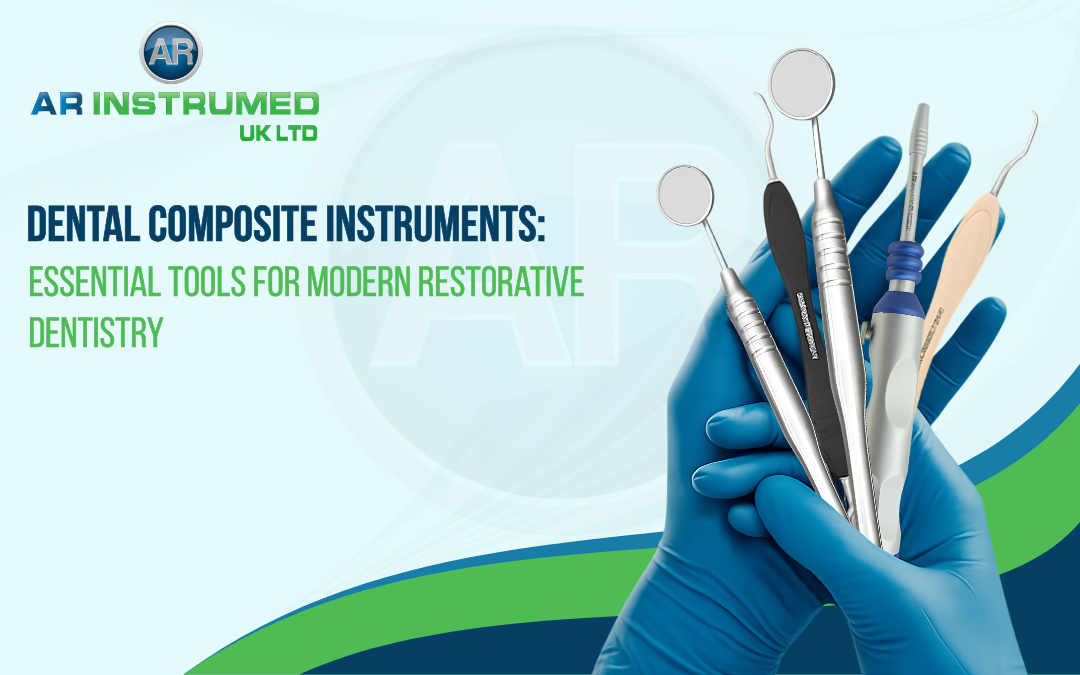
Dental composite instruments are precision hand tools used to place, shape, contour and finish composite resin during restorative procedures. For dentists carrying out fillings, build-ups or aesthetic restorations, the right instrument set directly affects how efficiently and accurately composite material can be handled chairside.
This guide covers the main instrument types, what to look for when buying, and how individual practitioners and dental practices can source reliable, professional-grade composite instruments in the UK.
What Are Dental Composite Instruments?
Dental composite instruments are hand-held tools designed specifically for working with composite resin during restorative dentistry. They allow clinicians to place material into a cavity, sculpt it to the correct anatomical form, contour the surface, and refine the final restoration before curing.
Unlike general-purpose dental tools, composite instruments typically feature non-stick tips designed to reduce material adhesion, precise working ends for controlled placement, and shapes suited to specific tasks such as interproximal contouring or occlusal modelling. They’re a core part of the instrument kit for any restorative or conservative dentistry procedure.
Essential Dental Composite Instruments for Restorative Dentistry
Several instrument types cover the different stages of a composite restoration, from initial placement through to finishing.
- Composite filling instruments – used to place and initially shape composite material within the cavity.
- Double-ended instruments – combine two working tips on a single handle, covering multiple tasks (placement and contouring, for example) without switching tools.
- Spatulas – used for mixing, placement and broad modelling of composite material.
- Sculpting and contouring instruments – fine-tipped tools for refining anatomical form, margins and surface detail.
- Hollenback-style instruments – commonly used for contouring and restorative work, particularly where access to proximal or interproximal areas is needed.
| Instrument Type | Common Use | What to Consider |
|---|---|---|
| Composite filling instrument | Placement and shaping | Tip design and handling |
| Double-ended instrument | Multiple restorative tasks | Versatility |
| Spatula | Placement and modelling | Tip shape |
| Hollenback instrument | Contouring and restorative work | Tip size and access |
| Composite instrument set | Multiple procedures | Range and value |
How to Choose the Right Dental Composite Instruments
Selecting composite instruments comes down to matching tip design, material and handle to the procedures your practice performs most often.
Key factors to consider:
- Tip shape and size – suited to the specific placement, contouring or finishing task
- Precision – tips that hold their edge and detail through repeated use
- Material – typically medical-grade stainless steel for strength and corrosion resistance
- Handle design and grip – affects control during longer procedures
- Double-ended design – useful for reducing instrument changes during a single restoration
- Sterilisation compatibility – instruments should be autoclavable and suited to routine decontamination cycles
- Durability – instruments that maintain performance across repeated sterilisation
- Procedure requirements – anterior aesthetic work, posterior restorations and larger build-ups may call for different tip profiles
- Individual instruments vs a set – depends on the range of procedures carried out
- Budget and purchasing volume – single-instrument purchases versus practice-wide or multi-site procurement
Why Stainless Steel and Ergonomic Handles Matter
Construction quality has a practical impact on day-to-day use. Medical-grade stainless steel resists corrosion and holds its finish through repeated autoclave cycles, which matters for instruments used across many patients and sterilisation rounds.
Handle design plays a similar role. An ergonomic, non-slip grip such as a soft silicone handle can make a difference to comfort and control during longer or more detailed restorative procedures, reducing hand fatigue over a full clinical day. This isn’t a clinical outcome claim; it’s simply a practical consideration when choosing between instrument ranges.
Individual Instruments vs Composite Instrument Sets
Whether to buy single instruments or a complete set depends on the scope of your restorative work and how many clinicians will use the tools.
Individual instruments suit a dentist who needs to replace or add a specific tip shape to an existing kit, or who wants to trial a particular design before committing further.
A complete instrument set makes sense for a new surgery setup, a practice standardising instruments across multiple clinicians, or anyone who wants a full range of placement, contouring and finishing tips in one purchase — such as the AR PRO Set of 8.
Multiple sets or bulk purchasing is typically the right route for dental practices with several surgeries, hospitals, dental schools, and clinics that need consistent instrument standards across a team. Distributors and procurement teams sourcing on behalf of multiple sites can also benefit from ongoing supply arrangements rather than one-off orders.
Why Choose AR Instrumed UK for Dental Composite Instruments?
AR Instrumed UK supplies a professional range of dental instruments, including composite filling instruments designed for restorative dentistry. The AR PRO Set of 8 is an 8-piece composite filling instrument kit made from premium medical-grade stainless steel, featuring double-ended precision tips for composite placement, shaping and contouring, and ergonomic soft silicone handles for grip and comfort during use. The set is fully autoclavable and produced to ISO 13485, FDA, CE and MDR standards.
The range is built for UK dental professionals and is suited to dental practices, clinics, hospitals and dental schools. For procurement teams and distributors, AR Instrumed UK also supports bulk orders and dental supply partnerships, with wholesale pricing available for practices, corporate groups and distributors sourcing on an ongoing basis.
Whether you need one professional instrument or are sourcing sets for an entire practice, dental school or distribution network, you can review the range or get in touch about bulk and B2B requirements .
Frequently Asked Questions
What are dental composite instruments used for?
They’re used to place, shape, contour and finish composite resin during restorative procedures such as fillings and build-ups, giving clinicians precise control over the final restoration.
Which instruments are needed for composite restorations?
A typical kit includes composite filling instruments, double-ended instruments, spatulas and contouring tools such as Hollenback-style instruments, covering placement through to finishing.
How do I choose dental composite instruments?
Consider tip shape and size, material quality, handle grip, sterilisation compatibility and whether your practice needs individual tools or a complete set based on the procedures you perform.
Are composite dental instruments autoclavable?
Instruments such as the AR PRO Set of 8 are fully autoclavable and made from medical-grade stainless steel designed to withstand repeated sterilisation cycles.
Where can I buy dental composite instruments in the UK?
AR Instrumed UK supplies professional composite instruments and sets to UK dentists, practices, clinics, hospitals and distributors, including options for bulk and wholesale purchasing.